
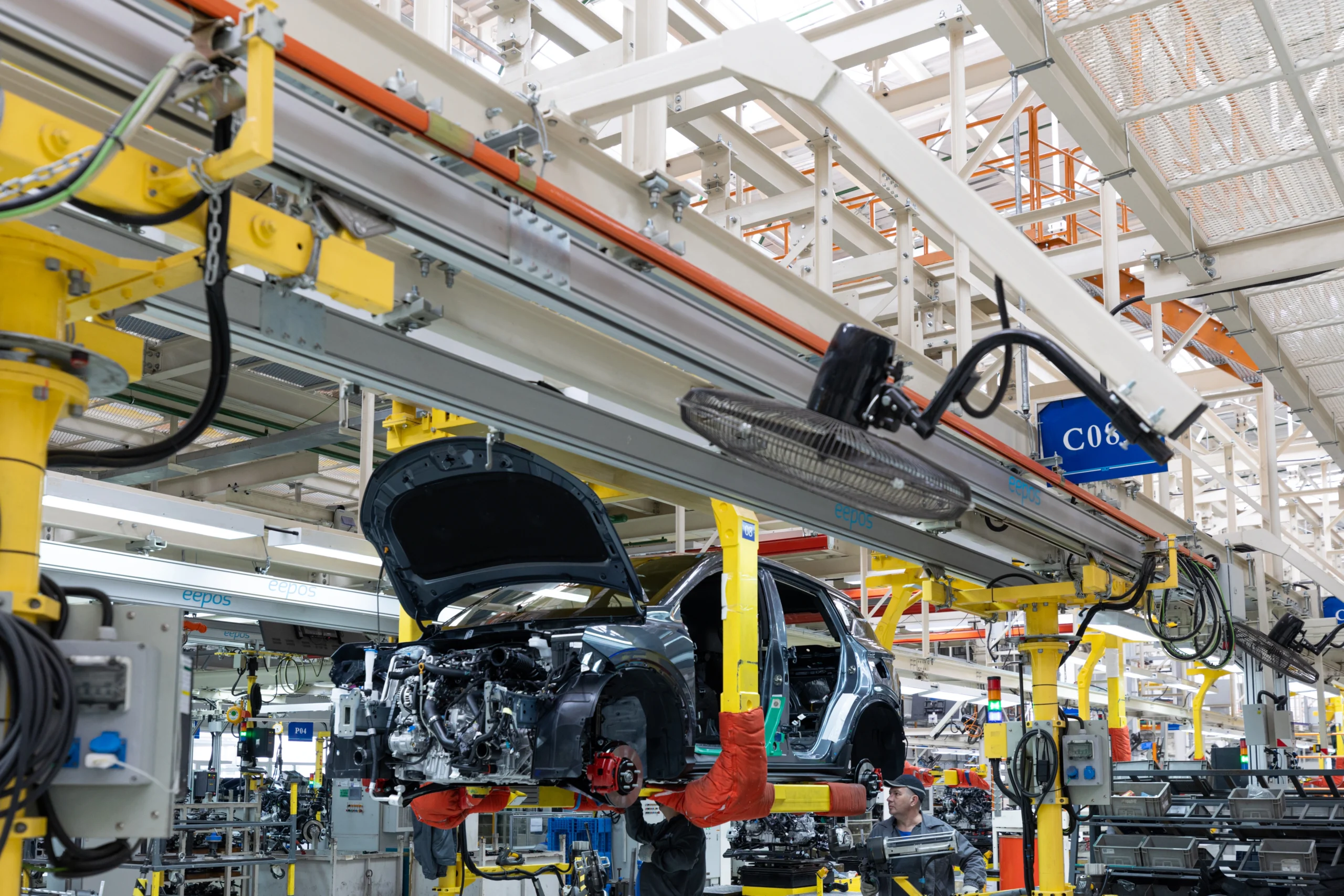
 IATF 16949 Fast-Track is needed by automotive industry as they have high demands for quality, consistency, traceability, operational control, and customer satisfaction. Automotive manufacturers and suppliers are under constant pressure to reduce defects, improve delivery performance, strengthen process controls, and meet stringent OEM and customer-specific requirements. This is why many automotive organizations pursue International Automotive Task Force 16949 certification. However, one of the biggest concerns organizations have been implementation time.
Many companies believe implementing IATF 16949 requires several months or even years. While complex organizations may require longer timelines, many organizations can establish a practical and audit-ready Quality Management System much faster when the implementation is properly structured.
At Kadmar Consultants, we help organizations achieve fast-track IATF 16949 implementation using a practical, process-based, and industry-focused approach. In many cases, organizations can establish core implementation requirements within approximately 20 working days depending on organizational readiness, leadership commitment, available resources, and process maturity.
IATF 16949 is the globally recognized Automotive Quality Management System standard developed for the automotive industry.
The standard integrates:
ISO 9001 Quality Management System requirements
Automotive customer-specific requirements
Risk-based thinking
Process-based management
Defect prevention methodologies
Continual improvement systems
Supply chain quality controls
IATF 16949 is commonly required for:
Yes — for many organizations, a structured implementation can establish the required Quality Management System framework within 20 working days.
However, implementation success depends on:
Organizations already operating with controlled manufacturing processes often realize they already have many operational elements in place. The challenge is typically aligning processes with IATF 16949 requirements and building structured documentation, risk management, auditing, and operational control systems.
Many organizations struggle with implementation because:
A successful implementation focuses on operational effectiveness, process control, and sustainability — not just paperwork.
At Kadmar Consultants, our implementation approach is practical, operational, and focused on real manufacturing environments.
We help organizations build systems aligned with:
Our fast-track implementation model focuses on:
Phase 1 – Gap Assessment & Planning
We begin by evaluating:
This helps identify implementation priorities and gaps against IATF 16949 requirements.
Phase 2 – Process Mapping & Documentation
Our focus is building lean and practical systems rather than excessive paperwork.
Phase 3 – Automotive Core Tools Integration
Core Tools are critical to IATF 16949 implementation.
We help organizations establish:
These tools help organizations improve process consistency, reduce defects, and strengthen operational controls.
Internal auditing is one of the most important areas of IATF 16949 implementation.
Kadmar Consultants helps organizations establish:
Our auditing approach aligns with ISO 19011 and automotive process auditing expectations.
Organizations implementing IATF 16949 effectively may benefit from:
Fast-track implementation also helps organizations prepare quickly for customer requirements and certification opportunities.
Organizations choose Kadmar Consultants because of our practical manufacturing-focused approach.
Our goal is to help organizations establish systems that improve operations while supporting certification readiness.
Is Your Organization Ready for IATF 16949?
Contact Kadmar Consultants for IATF 16949 Fast-Track Implementation Support
If you are looking for:
Our team provides practical, industry-focused, and audit-ready implementation support designed to help organizations establish strong Automotive Quality Management Systems efficiently and effectively.

Before we explain IATF 16949 Specialist let us first understand the meaning and intend of IATF 16949 standard. International Automotive Task Force (IATF) developed the standard for automotive organization and is complementary to ISO 9001. IATF defines structured risk-based approach that helps in defect prevention, & continuous improvement. Automotive environment has more strict requirements than ISO 9001 due to complexity and safety concern.
Now let us understand the role of the specialist. A specialist is a competent professional that understands the requirements of the automotive quality standards, understands the guiding principle behind the standard, and provides the Quality Management System framework.
The organizations QMS is evaluated and validated during certification and surveillance audits and therefore organization need the right resource and right system in place to demonstrate effectiveness.
The specialist act as a consultant, trainer, auditor, & implementation leads and help aid in below processes,
Faster Certification
Specialist is aware of the requirements, intend and process of the certification. They are aligned with certification body, OEM expectations and helps prevent major nonconformities from emerging.
Audit Readiness
From Stage 1 to Stage 2 audits, specialists ensure documentation and processes meet IATF requirements and system is properly implemented as stated.
Proper implementation leads to:
Supplier Quality Excellence
IATF specialists help establish:
A specialist first assesses and reviews the current system and conducts gap analysis against IATF 16949 requirements. Based on gap assessment, provides a future state plan containing processes, procedure and training requirement. The next steps go into documentation development and standardization of the processes. Initiate internal audit and management review meeting. Implementation phase rely on correct training and competency. Therefore the specialist need to integrate the understanding into the team members and they have to forward the information to all the employees.
This phase is very important for employee engagement and morale and helps business to grow.
An effective IATF 16949 specialist is an expert in:
Core Tool is the backbone of any automotive enterprise. It reinforces the risk approach into business planning. From receiving the incoming raw material or getting RFQ from customer to delivering the product and post delivery, all the processes are designed and assessed for risk and controls are deployed before realization of risk. This helps process optimization and risk management.
IATF 16949 Certification and correct implementation helps suppliers enter the competitive pool of potential suppliers for OEM.
When IATF 16949 System is not implemented as required, the system fails over time. The major challenges that occur during implementation phase are poor leadership support and process ownership. Weak risk analysis and understanding the risk and control requirements. Most of the time internal audits are considered as checklist not a continuous improvement tool. Misalignment between ISO 9001 and IATF requirements. Weak competency and limited training is another challenge. Poor management review concept in the end nullifies all the effort. An experienced IATF 16949 specialist mitigates these risks effectively.
Kadmar Consultants are the best in Automotive field. Our team of IATF 16949 specialist knows the nature and requirement of automotive sector, certifying bodies and OEMs. We work closely with them so we can implement the right system for you. IATF 16949 certification is not a paper document that helps you get in the pool of suppliers, rather it is a live document that helps organization implement a robust quality management system that mitigates risk, eliminates repeat issues and helps eliminate disruption from supply chain.
If you are currently an ISO 9001 certified, you will have to provide succession plan of moving to IATF 16949.
Typically, 3–6 months, depending on organization size and maturity. We work closely with our clients and get the work completed with ROI reflection.
Yes, but additional automotive-specific requirements must be implemented.
An IATF specialist is not just a compliance expert—they are a strategic partner in quality excellence. With the right guidance, organizations can achieve zero-defect culture, stronger customer trust, and sustainable growth in the automotive supply chain.
An IATF 16949 Specialist is not just a compliance expert—they are a strategic partner in quality excellence. With the right guidance, organizations can achieve zero-defect culture, stronger customer trust, and sustainable growth in the automotive supply chain.
Kadmar Consultants provides IATF 16949 Implementation for manufacturers and automotive organizations globally with regional support across Canada and the United States.
Author: Asma Rashid
 IATF 16949 Major NC Closure
IATF 16949 Major NC Closure is a huge concern for Tier 1, Tier 2 and all respective suppliers. Major NC can cause a pause or hold on the certification that can escalate to the customer and may go beyond and cause stop shipment.
We understand the pressure and we are here for you.
Kadmar Consultants, with extensive expertise in Automotive environment, we understand the challenge and Certifying Body requirements as per IATF 16949. Closing an IATF 16949 Major Nonconformity within 30–90 days is one of the biggest challenges faced by automotive suppliers. Today in this blog we will cover what is major NC, why do you get it and how to avoid it and if you are stuck with the major NC, steps you will need to resolve it.
A Major Nonconformity shows a crack in the Quality Management System (QMS), such as:
Major NC requires immediate containment and structured corrective action—not cosmetic fixes.
As per IATF Rules You have 30-90 days time framework to provide containment and corrective action.
Failure → Suspension or withdrawal of certification
Customer protection is vital and this phase emphasizes on customer satisfaction. Interim controls are in place to satisfy customer need and demand.
This phase requires deep dive into the problem situation. Focus on understanding problem before jumping to conclusion. The weakest root cause analysis is done on the symptom not the problem. Use strategies such as 5 Why Analysis, Fishbone (Ishikawa), Process mapping, Process-based gap analysis. Auditors look for systematic failure than generic failures. When human and training is given precedence over structured system failures, auditors will not give the buy in.
The objective of phase 3 is to fix the system permanently and the correct action points towards system, process redesign, and SOP updates along with risk assessment and competency development.
Validation phase is the most important phase in the NC closure as it validates the NC will not recur. Different validation techniques can be used and combined but not limited to internal audit results, KPI trend analysis, Process performance data, Management review evidence.
Auditor wants a system build on actual processes that works not paper model.
Kadmar Consultants does not only focus on closing the NC but the main preference is to eliminate the NC recurrence. We have expertise in,
Kadmar doesn’t just help you close NCs—we help you build a stronger Quality Management System.
Typically, 30–60 days, depending on complexity and effectiveness of corrective actions.
Yes. Failure to close within IATF timelines can lead to suspension or withdrawal.
Absolutely. Kadmar specializes in urgent and high-risk NC closures.
Closing an IATF 16949 major nonconformity within 30–90 days is not about speed—it’s about precision, evidence, and system correction.
With our proven framework, organizations achieve:
If you’re need with IATF 16949 Major NC Closure, Kadmar is your fastest and safest path to compliance.
Kadmar Consultants provides IATF 16949 Implementation for manufacturers and automotive organizations globally with regional support across Canada and the United States.
Contact us today to schedule on-site or virtual training.
Author: Asma Rashid
 AI & IATF 16949 are the two strong tools when integrated together can amplify the performance of automotive quality management system. This blog will help you understand how automotive organizations can adopt Artificial Intelligence and achieve competitive edge.
IATF 16949 an automotive standardization tool for quality management system focuses on customer satisfaction, defect prevention, and remove waste from the supply chain by focusing on process control. It induces risk-based thinking into the roots of the quality management system. AI on the other hand strengthens all these measures. Artificial Intelligence can be used as a proactive tool that helps predict failure before it occurs, aids in shortening response time for nonconformities. Provides quick and effective solutions and enhances APQP (Advanced Product Quality Planning) and PPAP (Production Part Approval Process) process.
AI for APQP PPAP
Artificial Intelligence helps cross functional teams to predict process risks and failures during design and process FMEA and helps provide a clear project timeline. Rather than human judgement on RPN scoring, it helps provide data-driven RPN scoring and identifies high-risk controls.
AI for Corrective Actions
Artificial Intelligence helps define failure modes and root causes associated with it and suggests corrective actions that can eliminate repeat issues.
Step 1: AI implementation can start from high priority/impact and small change or effort area. This will help a smooth pilot implementation process. AI does not change your system completely; it becomes part of the system by providing accurate and predictive information.
Defect detection can be employed using AI powered vison system.
Predictive maintenance using vibration, thermal, or acoustic AI sensors.
AI-assisted SPC to forecast process shifts before they become out-of-control.
Supplier Management System integrated with AI for improving and monitoring performance.
Step 2: Provide correct data, as it is said, “Garbage in is garbage out”.
Connect machines, PLCs, and sensors to a central data platform.
Clean, label, and structure production data.
Store historical process data for model training.
Step 3: Validation is the key step in any process. Either implementing a new process or running a system, validation is compulsory. This step focuses on validating AI before it becomes a control method. Incorporate it in PFMEA and Control Plan.
Step 4: Training employees is the most important step for executing AI as employees are the owner. Employees should understand how AI works and interprets data and process output.
Will AI Replace Employees?
No — AI itself is artificial intelligence; it gets and uses the intelligence of human data.
It provides data, answer, predict failure and suggest corrective action based on data collected globally. It will not replace employee but will help team be time effective, strategists and time is the ultimate resource that can not be replaced.
Instead of replacing workers, Artificial Intelligence will:
In the coming future OEMs and Certifying bodies will drive towards AI-based controls and actions.
AI will become a necessity, not a luxury.
Q: How AI helps with IATF 16949 requirements?
Artificial Intelligence and IATF 16949 both are continuous improvement tools. AI helps IATF system by turning data into proactive actions. AI predicts failure modes using machine, process, or sensor data and strengthens FMEA and CP. It helps identifying root causes and suggesting corrective actions. It improves customer satisfaction through more consistent quality and fewer escapes
Speeding up SPC and early warning det
Q: Can AI be used in PFMEA and DFMEA for automotive suppliers?
Yes. Artificial Intelligence can analyze historical failure data, customer issues, warranty claims, and process trends to recommend more accurate severity, occurrence, and detection ratings. It helps create dynamic FMEAs that update automatically instead of static spreadsheets.
Q: Will AI replace quality inspectors under IATF 16949?
No. As we have explained earlier in the blog, Artificial Intelligence will not replace worker but will automate the work. AI will have workforce focused towards strategic and decision-making tasks rather than clerical job. People are still needed to validate AI outputs, make decisions, complete root-cause analysis, and ensure compliance with customer-specific requirements.
Q: How does AI improve SPC (Statistical Process Control) in manufacturing?
AI predicts when a process will drift out of control, forecasts Cp/Cpk trends, identifies abnormal variation patterns, and provides real-time alerts. This moves SPC from reactive detection to predictive prevention, reducing scrap and customer rejection.
Kadmar Consultants offers IATF 16949 Training Programs for organizations across Canada and America.
We are your partner in building a strong Quality, Management System.
Book your IATF 16949 Consultancy Today and get 20% Discount.
Author: Asma Rashid
Kadmar Consultants helps Canada manufacturers achieve ISO 9001 and IATF 16949 certification through consulting, training & audit.
 On a search for the correct “IATF 16949 Consultant Near Me”? The main expectation you need from the consultant, apart from being cost effective and provide fast certification, is to implement the system in right way that can help your organization achieve its measurables like Cost of Poor Quality (CoPQ) and On Time Delivery (OTD). IATF 16949 standard is not just an OEM mandate requirement, but it holds more value for your Quality Management System (QMS). It is a strategic tool that help businesses align their scope and purpose with all the processes and induces synergy across department that makes all the processes working towards a common goal. The correct implementation of IATF 16949 builds an ecosystem where all processes are connected and activities within and between the processes are interlinked with customer being the driving force, this leads to world class automotive manufacturer.
The best IATF 16949 Consultant is the expert who understands not just the standard but the intend of it and knows getting through the certification is not the only purpose but to make organization streamlined and profitable so it can grow more business.
Kadmar Consultants is widely searched for IATF 16949 Consultant Near Me as we help organizations,
Kadmar consultants offers remote and onsite services. Being local in most of the cities in Canada and America has given us competitive edge over supply chain issues.
We work on 5 step strategy for correct implementation,
Step 1 — Gap Assessment
Review the current QMS and review all the gaps in the system via Kadmar Gap Assessment Tool (KGAT) that is aligned with IATF 16949 Requirements.
Step 2 — QMS Development & Documentation
The second step is to bridge the gap and define processes, control, and procedure necessary for the QMS.
Step 3 — Employee Training
Third step is the main step where system is in place but can not run effectively without employee support. They are the backbone of the organization. We provide end to end training services on IATF16949.
Step 4 — Internal Audit + Management Review
Run realistic audits that simulate certification conditions.
Step 5 — Certification Support
We prepare your team, so third-party auditors find minimal NCRs.
We integrate IATF 16949 + Lean Six Sigma strategies so your operational cost and scrap are minimized, making First Pass Yield successful and ultimately achievement of OEE and On Time Delivery. All this can help you achieve World Class Automotive Performance.
You need a consultant if you need to implement IATF 16949 standard, first time certification, need to maintain the QMS or preparing for surveillance and recertification audits. Another important reason to have consultants is when you have major nonconformities in external audit or your organization is on escalation from customer end. When customer demands increases and it is difficult to keep processes running and maintaining QMS at the same time, get the needed help from Kadmar.
Q. Does Kadmar Consultants provide IATF 16949 consultancy services near me?
Yes, Kadmar Consultants being the local and regional consultant we provide faster onsite support, and we understand North American automotive requirements, and offers immediate help during audits or customer escalations.
Q. How long does it take to get IATF 16949 certified?
It varies from organization to organization but somewhere between 1-4 months period based on organization need and complexity.
Q. What services do Kadmar consultants offer?
We offer services from start (System Design) to end (Certified Status) this includes Gap assessment, building processes and documentation, training employees, process mapping, APQP/PPAP support, internal audits, core tools training, and certification readiness. We do act as QMS Admin as well for organizations.
Q. Do you help with APQP and PPAP?
Absolutely — APQP and PPAP are core automotive requirements. Kadmar Consultants guide creation of PFMEA, Control Plans, MSA, capability studies, and submission packages.
Q. Do IATF consultants integrate Lean Six Sigma?
This is a practice Kadmar Consultants does and differentiate us from other consultants. We integrate IATF 169494 with Lean + Six Sigma that helps prevent repeat issues, reduces process variations, eliminate waste, improve throughput, and strengthen process capability, ultimately giving your organization competitive edge over competitors and help you grow your business with the certification badge.
Q. How much does Kadmar Consultants charge?
We are the most cost-effective consultants in North America region, and we will work with your organization even on tight budget.
Kadmar Consultants provides IATF 16949 Implementation for manufacturers and automotive organizations globally with regional support across Canada and the United States.
Contact us today to schedule on-site or virtual training.
Author: Asma Rashid